How does retatrutide work?
Retatrutide is one peptide designed to activate GLP-1, GIP, and glucagon receptors. This is the proposed mechanism, and what a Phase 2 trial measured.
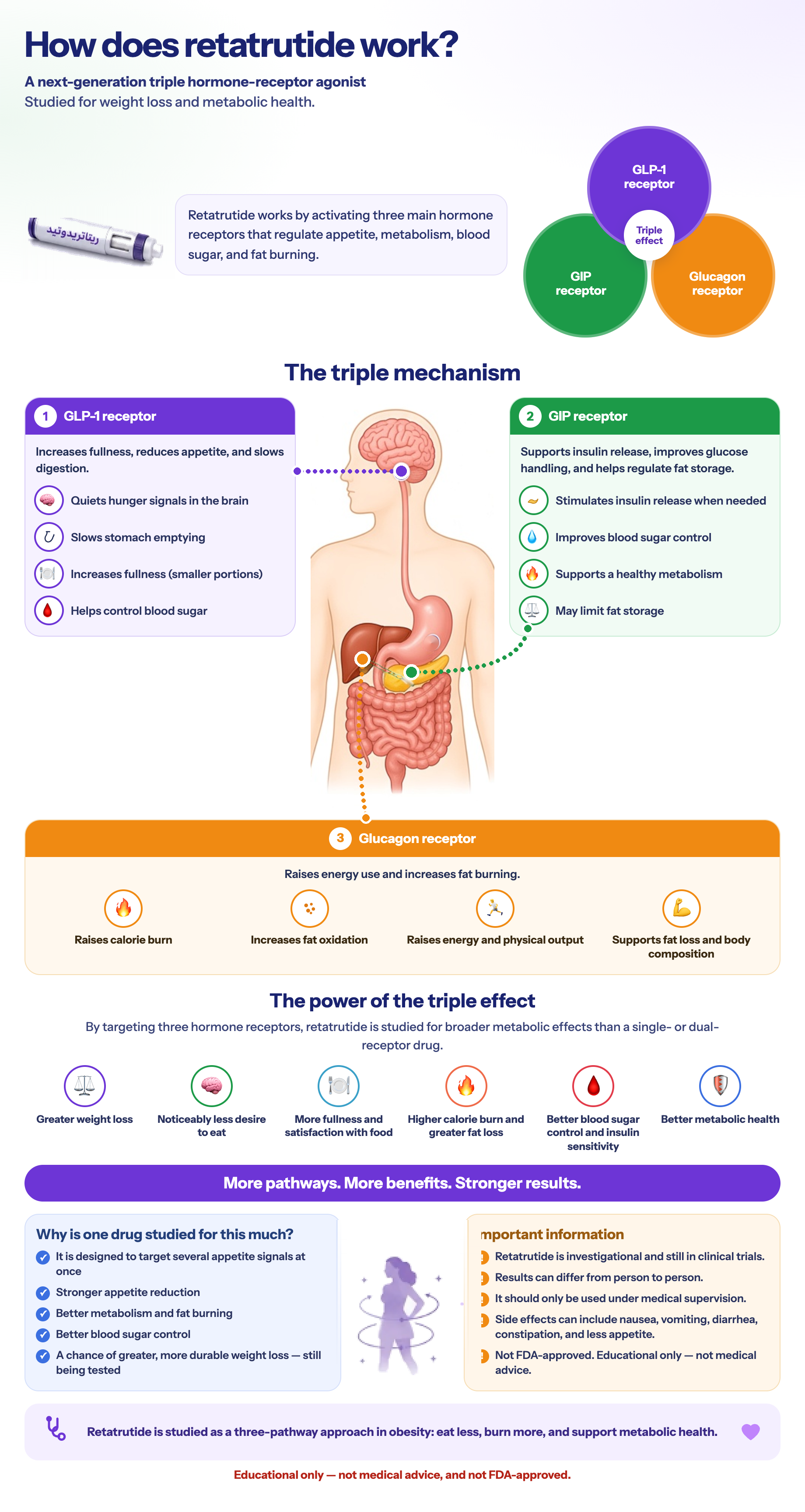
Retatrutide (LY3437943) is a single peptide built to turn on three hormone receptors at once: GLP-1, GIP, and glucagon. It is an investigational drug. It is not FDA-approved.
The triple mechanism
The graphic above is a map of the *proposed* pharmacology, not a promise of what any person will feel.
1. GLP-1 receptor
GLP-1 receptor agonists are already used as approved medicines for type 2 diabetes and obesity. Activating this receptor is tied to feeling full sooner, slower stomach emptying, quieter hunger signals in the brain, and better blood-sugar control.
2. GIP receptor
GIP is the other incretin hormone. Activating its receptor is studied for supporting insulin release when glucose is high, helping the body handle glucose, and changing how fat is stored. Tirzepatide already combines GIP and GLP-1 activity. Retatrutide adds a third receptor on top of that idea.
3. Glucagon receptor
Glucagon receptor activity is the part that is different from semaglutide or tirzepatide. Researchers study it for raising energy use and fat burning, including liver fat. It is also a reason heart rate and other safety signals are watched closely.
What a trial actually measured
A 48-week Phase 2 randomized trial in the *New England Journal of Medicine* (Jastreboff et al., 2023) enrolled 338 adults with obesity, or overweight plus a weight-related condition. Once-weekly retatrutide was compared with placebo.
At 48 weeks, the least-squares mean change in body weight was −8.7% at 1 mg, −17.1% in the combined 4 mg groups, −22.8% in the combined 8 mg groups, and −24.2% at 12 mg, versus −2.1% on placebo. The most common adverse events were gastrointestinal, and they were dose-related. Heart rate rose in a dose-related way, peaked around 24 weeks, and then declined.
Those figures describe that trial. They are not a personal forecast, and they are not a dosing guide.
Why three receptors are being studied
A single GLP-1 drug already reduces appetite and weight. Adding GIP and glucagon is a hypothesis that more pathways can move weight and metabolic markers further. The Phase 2 trial is consistent with a large effect. It does not, by itself, prove retatrutide is better than every other drug in a head-to-head test. Phase 3 programs are how that question gets answered.
What this does not mean
Retatrutide sold online as a research chemical is not the product used in the trial. Mechanism cartoons — fullness, slower emptying, fat burning — are simplified. Diet, movement, sleep, and clinical care still sit underneath any drug effect that trials report.
Bottom line
Evidence ladder: Human RCT for the published Phase 2 weight result. The three-receptor story is the drug’s design. Approval, long-term safety, and results after people stop the drug are still open questions.
Sources
Educational content only — not medical advice. See our Medical disclaimer and Editorial policy.